Was David E. George actually John Wilkes Booth?
For decades, some claimed the man who died in Enid, Oklahoma in 1903 — David E. George — was John Wilkes Booth, escaped and in hiding. Here is the evidence that built the claim, the evidence against it, and what Black concluded.
Black's conclusion: not supported.
Presented as proof
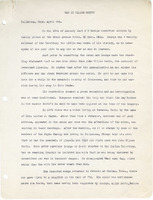
The earliest public account of George's deathbed confession — marshaling the broken leg, a handwriting "facsimile," and a photographic likeness as proof he was Booth.
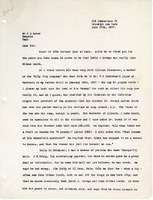
A believer thanks Bates "for the pains you have taken to prove" the identification, describing the mummy's startling "likeness" to a Booth portrait and relaying witness accounts.
A believer's ten-page letter piling up leads and urging Black to have a surgeon compare the two Booth photographs in Bates's book.
Circulated the story
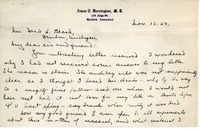
A former Enid editor passes along firsthand recollections of the embalmed body — and offers to supply more.

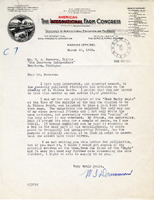
A rare-book dealer advertises Bates's book — "Study the pictures of St Helen and Booth!" — selling the escape claim as a product.
Refutes the claim
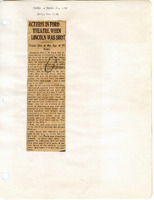
An anonymous reader argues Booth's identity can be settled by comparing the shape of the ear in published photographs — the mismatch disproves the tintype.
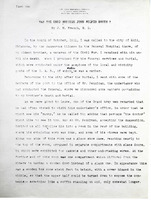
A 17-page investigative essay that lays out the believers' case and then dismantles it point by point — concluding the Enid body was "a pretender."
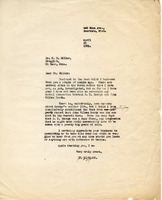
Black states plainly he found no connection between George and Booth, and has established that Booth died at the Garrett barn.
Black's evaluation
Black traced the claim to Finis Bates's book and the embalmed body exhibited as proof. Checking the physical evidence — the broken-leg discrepancy, a seven-witness coroner's affidavit — and finding the identification rested on an unverifiable confession and on Bates's own financial stake, he concluded George was not Booth, and that Booth died at the Garrett barn in 1865.